
Questions on bow design limited to local resources...
I'm looking for a composite design that is limited to the natural resources in my local environment, fitted to my situation and needs. Yet I want something that taps into a traditional design/designs.
My resources are Birch, Tamarac/larch, mooses sinew, Birch bark, and moose leg bone with two very straight flat sides about a foot long.
My situation is sub-arctic boreal forest, hunting moose and small game like grouse/rabbits. Summer includes very wet bogs/marshes and dry uplands in the hills.
I'm thinking along the lines of a large Manchu style bow, all wood composite with sinew back and Birch bark covering for waterproofing. I also lean towards very long heavy arrows and steel heads for deep penetration at medium range for moose.
I've considered the cable backed Eskimo bows and the Buriat bows. It is possible that I could get whale baleen for a belly lamination for the bow. Any thoughts and suggestions.
Would Larch/Tamarac hold up well enough for a belly lamination if the bow was not overly reflexed by the sinew backing? Has anyone tried whale baleen for a horn substitute. What about bamboo bellies on Chinese composites?
My resources are Birch, Tamarac/larch, mooses sinew, Birch bark, and moose leg bone with two very straight flat sides about a foot long.
My situation is sub-arctic boreal forest, hunting moose and small game like grouse/rabbits. Summer includes very wet bogs/marshes and dry uplands in the hills.
I'm thinking along the lines of a large Manchu style bow, all wood composite with sinew back and Birch bark covering for waterproofing. I also lean towards very long heavy arrows and steel heads for deep penetration at medium range for moose.
I've considered the cable backed Eskimo bows and the Buriat bows. It is possible that I could get whale baleen for a belly lamination for the bow. Any thoughts and suggestions.
Would Larch/Tamarac hold up well enough for a belly lamination if the bow was not overly reflexed by the sinew backing? Has anyone tried whale baleen for a horn substitute. What about bamboo bellies on Chinese composites?
Hi hermitking, welcome here, another real bowyer here, I wonder where they all are coming from suddenly?
Maybe you can get compression pine, this would be the first choice, where you are living. But I guess you can get compression larch too.
Some Siberian tribes used compression larch for their 2- wood laminated bows as the belly and birch for the back. Quite interesting that they call compression larch "bow- wood".
If you want to make a bow according to your local resources and your environmental conditions I would do a 2 wood lam in the Siberian or Scandinavian way. It will match perfectly what you want and what you need.
These bows are looking like hornbows, they have siyahs and a sinew- backing produceing more or less reflex. Usually the grip and the siyahs are enforced with bone- plates, the bows are completely wrapped with birchbark. These are great bows, I guess them to perform like hornbows, but more reliable.
Search in the forum for Russian bows or bows of Northern Europe.
Michael
Maybe you can get compression pine, this would be the first choice, where you are living. But I guess you can get compression larch too.
Some Siberian tribes used compression larch for their 2- wood laminated bows as the belly and birch for the back. Quite interesting that they call compression larch "bow- wood".
If you want to make a bow according to your local resources and your environmental conditions I would do a 2 wood lam in the Siberian or Scandinavian way. It will match perfectly what you want and what you need.
These bows are looking like hornbows, they have siyahs and a sinew- backing produceing more or less reflex. Usually the grip and the siyahs are enforced with bone- plates, the bows are completely wrapped with birchbark. These are great bows, I guess them to perform like hornbows, but more reliable.
Search in the forum for Russian bows or bows of Northern Europe.
Michael
Like these:
http://anthro.amnh.org/anthropology/dat ... tfolio=yes
http://anthro.amnh.org/anthropology/dat ... tfolio=yes
Redhawk: From where do you have information on bone plates for the grips and siyahs? I have never seen that mentioned before. It is most likely not the case for the norwegian, swedish and finnish bows, but I have had trouble finding information on the siberian versions.
The bow from Novgorod is said to have had a sinew backing, but from what I remember now, that is the only bow that has been thought to have a sinew backing. I think it was concluded on false premises, though. The two wood bows does not need it as long as the birch backing has straight grain. Plus, it seems from the latest Atarn tests that the sinew backing does not perform too good in cold temperatures.
The brilliant thing about these bows are that, because of the compression wood belly, they thrive in higher humidities than other wood bows.
http://anthro.amnh.org/anthropology/dat ... tfolio=yes
http://anthro.amnh.org/anthropology/dat ... tfolio=yes
Redhawk: From where do you have information on bone plates for the grips and siyahs? I have never seen that mentioned before. It is most likely not the case for the norwegian, swedish and finnish bows, but I have had trouble finding information on the siberian versions.
The bow from Novgorod is said to have had a sinew backing, but from what I remember now, that is the only bow that has been thought to have a sinew backing. I think it was concluded on false premises, though. The two wood bows does not need it as long as the birch backing has straight grain. Plus, it seems from the latest Atarn tests that the sinew backing does not perform too good in cold temperatures.
The brilliant thing about these bows are that, because of the compression wood belly, they thrive in higher humidities than other wood bows.
If you have access to baleen and have no moral reason for not using it, it should be able to produce any hornbow known to man. birch should be ok core wood.
I think baleen is available on peaces longer than horns, so things like
single piece belly lamination are possible.
I think compression larch could be used like compression pine in Saami bows. I have however not heard anyone doing so..
I assume the birch you have is better that silver/downy* birch available in Finland, so they could be used for sinew backed wood bows or wood self bows.
*) known for notariously poor compression durability
Do you want the bow to be working in local atmosphere?
(Moisture protection is enough to keep it dry enough during hunting trip.)
Should it survice central heating? (unbacked juniper has problems...)
I think baleen is available on peaces longer than horns, so things like
single piece belly lamination are possible.
I think compression larch could be used like compression pine in Saami bows. I have however not heard anyone doing so..
I assume the birch you have is better that silver/downy* birch available in Finland, so they could be used for sinew backed wood bows or wood self bows.
*) known for notariously poor compression durability
Do you want the bow to be working in local atmosphere?
(Moisture protection is enough to keep it dry enough during hunting trip.)
Should it survice central heating? (unbacked juniper has problems...)
Kviljo, you?re right about the bone- plates in bows from Northern Europe.
I know the Novgorod bow is made with bone- plates at the grip and the siyahs.
In Siberia I?ve seen a lot of bone- plate findings excavated together with bows.
Almost every finding shows tracks of birch- bark backing or wrapping.
No sinew in the findings, but the Russian archeologists told me that Siberian bowyers have sinew- backed their shorter bows.
Michael
I know the Novgorod bow is made with bone- plates at the grip and the siyahs.
In Siberia I?ve seen a lot of bone- plate findings excavated together with bows.
Almost every finding shows tracks of birch- bark backing or wrapping.
No sinew in the findings, but the Russian archeologists told me that Siberian bowyers have sinew- backed their shorter bows.
Michael
Hermit, Yes welcome. The discussion about two wood bows has definite merit. You will also find inspiration in local museums. You will find that the local indigenous solved the problem in the most efficient manner. Canadian museums will also be helpful. Please report back what you find.
In three visits to Alaska I only found one bow with a baleen belly, maybe that was in the bank museum in Anchorage. I cannot remember seeing them in artifact books either. This, in theory should be about the best material available. But when examining it seems somehow excessively pliable. It may also be that gluing it to a wood core was a problem historically.
For other ATARNites; Alaska subsistence hunters are accommodated by the Marine Mammal protection Act because of low requirements and historic need. They are in many cases allowed to sell their products in the USA. Baleen is such an item. -j-
In three visits to Alaska I only found one bow with a baleen belly, maybe that was in the bank museum in Anchorage. I cannot remember seeing them in artifact books either. This, in theory should be about the best material available. But when examining it seems somehow excessively pliable. It may also be that gluing it to a wood core was a problem historically.
For other ATARNites; Alaska subsistence hunters are accommodated by the Marine Mammal protection Act because of low requirements and historic need. They are in many cases allowed to sell their products in the USA. Baleen is such an item. -j-
Interesting stuff!
I think I have red somewhere that larch were used in the Siberian bows. It might have been Tuukka who mentioned it, though I'm not sure if it has been confirmed via tests of original bows.
Is there any good information on the Novgorod bow somewhere? All I have seen is one picture and a drawing (e.g. Novgorod the great, 1967, Thompson). Medvedev (1966) does suggest it had grip and siyah plates, but I don't see how the bow from Novgorod alone could suggest that. As long as there is no splice at the grip, there should be no use for the grip plates? Could it not be that the plates came from horn bows?
Hermitkong, if you are hunting at this time of year, you could go for the ?rbyhus-bow (Sami bow from around 1700):
[external image]
I think I have red somewhere that larch were used in the Siberian bows. It might have been Tuukka who mentioned it, though I'm not sure if it has been confirmed via tests of original bows.
Is there any good information on the Novgorod bow somewhere? All I have seen is one picture and a drawing (e.g. Novgorod the great, 1967, Thompson). Medvedev (1966) does suggest it had grip and siyah plates, but I don't see how the bow from Novgorod alone could suggest that. As long as there is no splice at the grip, there should be no use for the grip plates? Could it not be that the plates came from horn bows?
Hermitkong, if you are hunting at this time of year, you could go for the ?rbyhus-bow (Sami bow from around 1700):
[external image]
![[external image]](http://kviljo.no/bue/orbyhus/1.jpg)
Kviljo, somewhere in the ATARNET is my small report about making a Novgorod bow.
I had to do a larger report about the making of a Novgorod bow for a German magazine, if you understand German I could mail it to you.
Anyway I could post some drawings I?ve found about the subject.
But I need to find them somewhere in my old laptop.
Michael
I had to do a larger report about the making of a Novgorod bow for a German magazine, if you understand German I could mail it to you.
Anyway I could post some drawings I?ve found about the subject.
But I need to find them somewhere in my old laptop.
Michael
That would be brilliant! Although I hesitate to speak German, reading is okay :)
I'll look up your report, and send a PM with my e-mail.
I'll look up your report, and send a PM with my e-mail.
I have seen photos of a baleen bellied composite bow made by Tim Baker. The outcome of the bow is unknown to me. A friend of his related that he was afraid to pull the balleen bow to full draw. That was over ten years ago.
I have pretty easy access to balleen, living near Fairbanks AK. The problem is that I don't want to make a bow that requires me to buy the expensive baleen. I want to limit the design to local natural materials if possible. If I lived closer to an arctic coastal village where Baleen was more common and easy to get I think I would try it there.
I have gone to the Ethnology department collection at the University of Alaska Fairbanks to view the Atlatal dart throwers and archery gear. The Eskimo and Aluet bows were commonly wide limbed Birch with a sniew cable backing. The Athabascan bows of the interior were universally ver6y narrow long limbed straight bows of Birch. When strung such long birch bows were braced very low and almost now stress was present until one actually drew the bow several inches.
After trying Birch for self bows a few times I developed littel respect for it as an option, although I must admit I was trying to make a quicky experimental bow rather than a meticulously crafted bow.
Someone mentioned the Finish Birch as being inferior in compression strength. Alaska Brich seems to be the same. After cutting a lot of Birch under different circumstances I have noticed that the wood is much denser near the base of the trunk. I used roots for siyahs a few times. Larger Birch trees that are leaning over a slope probably develope more dense compression side wood and I know where I can get that.
We have Larch up here, or what I have been told is Larch. We call it Tamarac. It looks like a pine or spruce but sheds its needles in winter. When cut it has a very pleasant aroma much like orange or some sort of Citrus. I Used it for laminated sled runners and it was easy to bend. I heard that Norwegian boat builders liked it for the lap joined side of their boats. Unfortunately our Tamarac was almost wiped out by some sort of disease. After the local Tamaracs started growing back we then has a forrest fire that raosted everything.
I have pretty easy access to balleen, living near Fairbanks AK. The problem is that I don't want to make a bow that requires me to buy the expensive baleen. I want to limit the design to local natural materials if possible. If I lived closer to an arctic coastal village where Baleen was more common and easy to get I think I would try it there.
I have gone to the Ethnology department collection at the University of Alaska Fairbanks to view the Atlatal dart throwers and archery gear. The Eskimo and Aluet bows were commonly wide limbed Birch with a sniew cable backing. The Athabascan bows of the interior were universally ver6y narrow long limbed straight bows of Birch. When strung such long birch bows were braced very low and almost now stress was present until one actually drew the bow several inches.
After trying Birch for self bows a few times I developed littel respect for it as an option, although I must admit I was trying to make a quicky experimental bow rather than a meticulously crafted bow.
Someone mentioned the Finish Birch as being inferior in compression strength. Alaska Brich seems to be the same. After cutting a lot of Birch under different circumstances I have noticed that the wood is much denser near the base of the trunk. I used roots for siyahs a few times. Larger Birch trees that are leaning over a slope probably develope more dense compression side wood and I know where I can get that.
We have Larch up here, or what I have been told is Larch. We call it Tamarac. It looks like a pine or spruce but sheds its needles in winter. When cut it has a very pleasant aroma much like orange or some sort of Citrus. I Used it for laminated sled runners and it was easy to bend. I heard that Norwegian boat builders liked it for the lap joined side of their boats. Unfortunately our Tamarac was almost wiped out by some sort of disease. After the local Tamaracs started growing back we then has a forrest fire that raosted everything.
I have collected a large supply of Moose leg bones. I have noticed that certain leg bones have two very flat long and straight sides. They are large enought that I have used them for the scales on knife handles and bone bladed arrowheads.
I can get bone slats about 3/4 inch wide 1/4-3/16 inch thick and about a foot long. I thought about trying to glue them in a channel in the belly of a Birch bow and wrap the butt joints in sinew. I don't really want to try it unless someone else has been able to use bone in the belly of a bow. I saw the Buffalo rib bone Bow made by Jim Hamm, and he said it was to stiff and inflexible to be a pleasant shooter. But then again the profile had the ends curve toward the string rather than recurve them. I suspect that if he had added some siyahs He would have had better leverage and less stacking on the draw.
I can get bone slats about 3/4 inch wide 1/4-3/16 inch thick and about a foot long. I thought about trying to glue them in a channel in the belly of a Birch bow and wrap the butt joints in sinew. I don't really want to try it unless someone else has been able to use bone in the belly of a bow. I saw the Buffalo rib bone Bow made by Jim Hamm, and he said it was to stiff and inflexible to be a pleasant shooter. But then again the profile had the ends curve toward the string rather than recurve them. I suspect that if he had added some siyahs He would have had better leverage and less stacking on the draw.
Those archeological specimens of the bows with static ears is kind of what I am thinking about.
That Saami bow looks interesting also. Didn't they wrap them with Birch bark and make them from laminations of Birch and compression pine?
In theory I'm considering a long bow core with alot of deflex or string follow purposely built into the bow, with reflexed siyahs, sinew backed, and Birch bark covering. The deflex in the limbs, I hope, will eliminate the compression problems. Working out the exact ammout of sinew back stretching and belly compression with poor compression wood is the question that I am considering. I've made the design work with harder woods like Hickory and Osage, but now I want to adapt it to local materials.
That Saami bow looks interesting also. Didn't they wrap them with Birch bark and make them from laminations of Birch and compression pine?
In theory I'm considering a long bow core with alot of deflex or string follow purposely built into the bow, with reflexed siyahs, sinew backed, and Birch bark covering. The deflex in the limbs, I hope, will eliminate the compression problems. Working out the exact ammout of sinew back stretching and belly compression with poor compression wood is the question that I am considering. I've made the design work with harder woods like Hickory and Osage, but now I want to adapt it to local materials.

![[external image]](http://img.enter4u.eu/th/Rusko.Muzeumartilerijeirs3.jpg)
Yes, the two wood bows were laminated from birch and compression pine, and many, but probably not all were covered with birch bark. There are a few closeup pictures of how the belly piece is inserted here:
http://kviljo.no/bue/orbyhus/3.jpg
http://kviljo.no/bue/orbyhus/4.jpg
http://kviljo.no/bue/orbyhus/2.jpg
http://kviljo.no/bue/orbyhus/3.jpg
http://kviljo.no/bue/orbyhus/4.jpg
http://kviljo.no/bue/orbyhus/2.jpg
Hermit; A classic but antiquated mistake, one that Jim Hamm also fell into, is not seeing that plains bows were often made with elk antler bellies.
Antler bellies were also used in Siberia in the neolithic.
You might make one of each appropriate sub arctic type bow for comparison. Keep in mind that a cable backed bow is a coastal tool. Athapaskan may be more appropriate. You may have to make one of those moose spears, though.
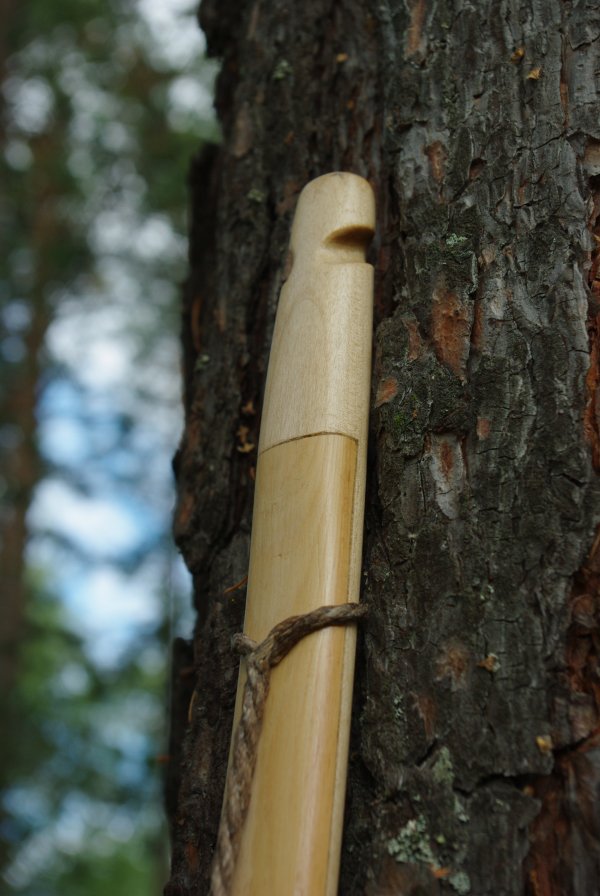
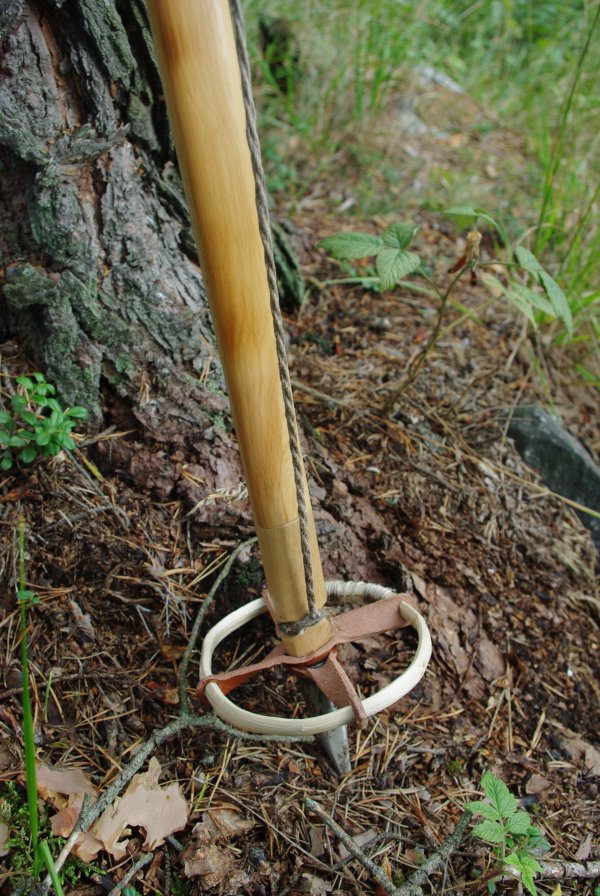
Kviljo, nice ski pole. It could also be used as a bow! or a propeller! You may have seen plains "Medicine bows" with a spear tip.
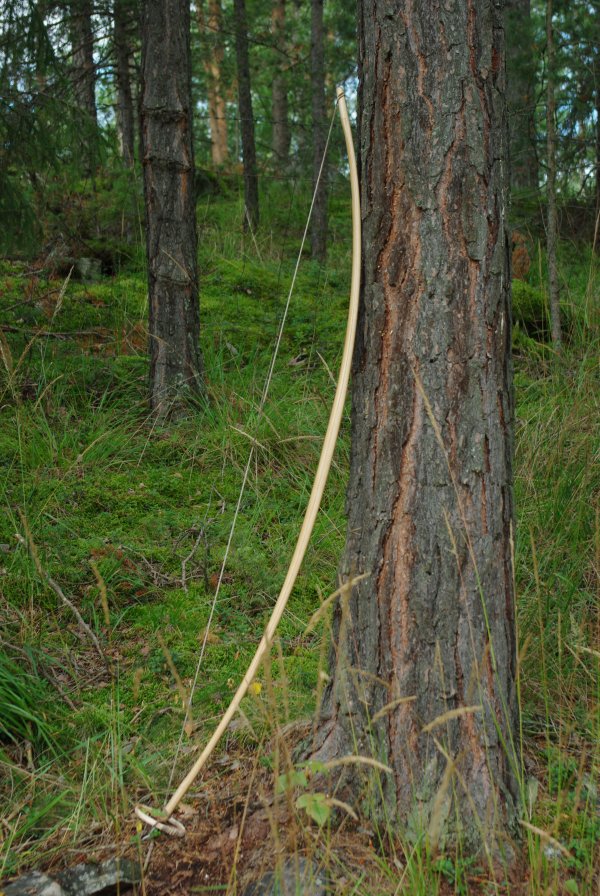
Nice clean bow. -j-
Antler bellies were also used in Siberia in the neolithic.
You might make one of each appropriate sub arctic type bow for comparison. Keep in mind that a cable backed bow is a coastal tool. Athapaskan may be more appropriate. You may have to make one of those moose spears, though.
Kviljo, nice ski pole. It could also be used as a bow! or a propeller! You may have seen plains "Medicine bows" with a spear tip.
Nice clean bow. -j-
These are really great suggestions.
I think the compression pine/spruce/larch bellied designs may be a really good solution for my environment. I just can't seem to help it, but my natural instinct is to make something with a recurve or static ears. The two wood samples with the siyah like ears really appeals to me. Hunting for compression wood on leaning trees does limit my wood supply though. Do you think that a birch tree can develope good compression wood on the underside of a leaning tree? I know where a monster sized leaning birch is that is probably 100 years old.
The picture posted of a cable backed bow looks like a viable design also, but I think I need to research the exact method of construction more. The cable backed bows I have seen were almost all built with come deflex in the center of the bow. I'm guessing this was a way of dealing with the poor compression qualities of birch.
Frankly, the all Birch narrow limbed Athabascan bow seesm a little to fragile and weak. I know they hunted cariboo and moose often, but they also drove them into fences and snares to make it easier and safer for real up close shooting. From What ethnologist suggest Athabascans relied on the fence and snare more than anything else for getting cariboo and moose. So the moose spear suggestion is not a bad idea.
Durability is the first quality I look for in bow designs. Power and range are secondary considerations.
I think the compression pine/spruce/larch bellied designs may be a really good solution for my environment. I just can't seem to help it, but my natural instinct is to make something with a recurve or static ears. The two wood samples with the siyah like ears really appeals to me. Hunting for compression wood on leaning trees does limit my wood supply though. Do you think that a birch tree can develope good compression wood on the underside of a leaning tree? I know where a monster sized leaning birch is that is probably 100 years old.
The picture posted of a cable backed bow looks like a viable design also, but I think I need to research the exact method of construction more. The cable backed bows I have seen were almost all built with come deflex in the center of the bow. I'm guessing this was a way of dealing with the poor compression qualities of birch.
Frankly, the all Birch narrow limbed Athabascan bow seesm a little to fragile and weak. I know they hunted cariboo and moose often, but they also drove them into fences and snares to make it easier and safer for real up close shooting. From What ethnologist suggest Athabascans relied on the fence and snare more than anything else for getting cariboo and moose. So the moose spear suggestion is not a bad idea.
Durability is the first quality I look for in bow designs. Power and range are secondary considerations.
Does antler posess qualities differing from bone? All the antler I have dealt with appears to be just like bone.
Does antler have more elasticity than bone?
Also, the antler bellies onf the neolithic era, were they fixed upon a wood core, or simply sinew antler combination.
What is really catching my eye in all these pictures and suggestions is what seems to me to be the origins of the horn/wood/sinew composite design. First the sub arctic/ arctic hunters struggled with making bows out of poor comression wood, so they laminated the compression wood on from a leaning tree. Once the idea of lamination and composites of differing woods takes hold, the next logical step would be to try other materials such as horn or antler. The cable back was an idea probably borrowed from actual observation of the animal anatomy, and using the sinew on the bow for the same purpose it served in the animal's body, an elastic attachment powering the motion of jointed bones.
To an eskimo the bow seemed like the bones of an animal and the sinew cable gave it motion. Incidentally in arctic environments, before the invention of metal cooking pots, glue manufacture would have been a very difficult task. Thus the cable back probably predated the glued sinew back. I think all these elements eventually merged into the asian horn composite.
It think this is easily seen in those samples of the two wood bows with the static ears. It was a good design but eventually some one decided that they wanted a belly with more compression strength and started experimenting.
Does antler have more elasticity than bone?
Also, the antler bellies onf the neolithic era, were they fixed upon a wood core, or simply sinew antler combination.
What is really catching my eye in all these pictures and suggestions is what seems to me to be the origins of the horn/wood/sinew composite design. First the sub arctic/ arctic hunters struggled with making bows out of poor comression wood, so they laminated the compression wood on from a leaning tree. Once the idea of lamination and composites of differing woods takes hold, the next logical step would be to try other materials such as horn or antler. The cable back was an idea probably borrowed from actual observation of the animal anatomy, and using the sinew on the bow for the same purpose it served in the animal's body, an elastic attachment powering the motion of jointed bones.
To an eskimo the bow seemed like the bones of an animal and the sinew cable gave it motion. Incidentally in arctic environments, before the invention of metal cooking pots, glue manufacture would have been a very difficult task. Thus the cable back probably predated the glued sinew back. I think all these elements eventually merged into the asian horn composite.
It think this is easily seen in those samples of the two wood bows with the static ears. It was a good design but eventually some one decided that they wanted a belly with more compression strength and started experimenting.
The history of Inuit bow types suggests that rather than influencing others, they were the recipients of influences when it comes to bow design. There was a similar effect on reindeer saddles. Some authors thought that because the technology of the reindeer herders was more primitive than their southern neighbours, saddles were developed by them and then copied by steppe riders in the south. They even cited the reindeer/stag headdresses made for the buried horses of Pazyryk as proof that reindeer riding preceded horse riding. However, it now looks like the opposite was true. Reindeer herders saw horse riders and thought, why can't we do this with our reindeer? They copied wood framed horse saddles and adapted them to reindeer backs.
Some of the designs of Arctic bows can be traced back a long way, but research seems to indicate that the eared bows developed after the similar horn and sinew composites. The ancient antler bows from Siberia are nothing like later Inuit or North American antler bows. The Inuit bows also have various types within their group. They are all technologically sophisticated. We often look at primitive peoples and think that they are living the lives and using the technologies of our ancient forebears, but they have had thousands more years to refine and adapt their technologies. They also have had various environmental changes to cope with.
Northern wood laminated bows have features that make sense in a highly stressed horn/wood/sinew composite, but are just dead weight in a laminated wood bow, even with a sinew back.
Some of the designs of Arctic bows can be traced back a long way, but research seems to indicate that the eared bows developed after the similar horn and sinew composites. The ancient antler bows from Siberia are nothing like later Inuit or North American antler bows. The Inuit bows also have various types within their group. They are all technologically sophisticated. We often look at primitive peoples and think that they are living the lives and using the technologies of our ancient forebears, but they have had thousands more years to refine and adapt their technologies. They also have had various environmental changes to cope with.
Northern wood laminated bows have features that make sense in a highly stressed horn/wood/sinew composite, but are just dead weight in a laminated wood bow, even with a sinew back.
Has anyone EVER reconstructed an antler bellied bow?
I have not seen any pictures.
I have not seen any pictures.
Dr Grayson did and I have drawn it. It was a short bow made for a 23 inch draw. It was stiff and the thick sinew layer provide most of the energy storage.
Pictures, or other information please...
There are many examples of Plains elkhorn bows in various museums in the USA. Bill Holmes (Native American Bows) made a list of all of these, not in the publication. R Laubin describes his own excellent experiments in American Indian Archery. Of course these bows have NO WOOD CORE. Plains horn bows do not have wood cores.
In "People of the First Man" Bodmer paints an excellent picture of a Missouri River Indian carring one of these bows.
Elkhorn is rather thin with a spongy core. The hard horn is much more flexible than bone. This is why it was used. Caribou horn is solid and seems less flexible than Elk but I have not made slats of the material.
Given horn's difficulty with cold, it is no wonder that Siberian's experimented with antler.
In "People of the First Man" Bodmer paints an excellent picture of a Missouri River Indian carring one of these bows.
Elkhorn is rather thin with a spongy core. The hard horn is much more flexible than bone. This is why it was used. Caribou horn is solid and seems less flexible than Elk but I have not made slats of the material.
Given horn's difficulty with cold, it is no wonder that Siberian's experimented with antler.
Jkekoni,
There is some info on the antler sinew backed bows in the T. M. Hamilton?s book ?Native American Bows?, Bill Holmes? appendix on making native horn and antler bows to be found in the book as well.
There is some info on the antler sinew backed bows in the T. M. Hamilton?s book ?Native American Bows?, Bill Holmes? appendix on making native horn and antler bows to be found in the book as well.
Laubin gives full instructions and illustrations.